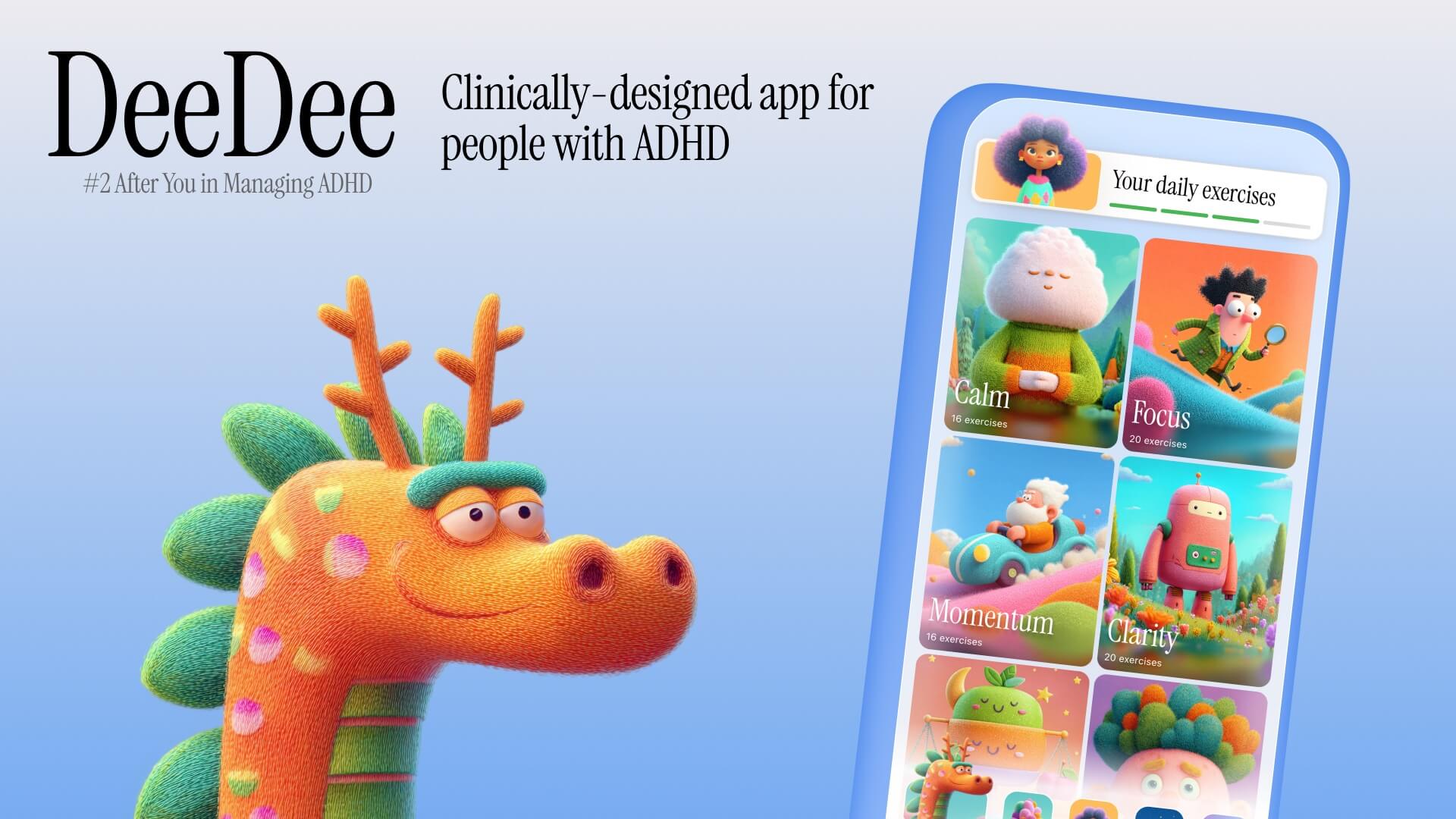
"Soft Design" radically changed how users perceived the app and improved nearly every key metric.
Six months ago, our team at DeeDee — a daily assistant app for people with ADHD — went through a complete redesign. We decided to introduce what we call "soft design." This decision radically changed how users perceived the app and improved nearly every key metric. Even more impressive, the entire redesign took less than a month — thanks to AI, which became our irreplaceable companion not only in development but also in design.

Stage 1 — Research
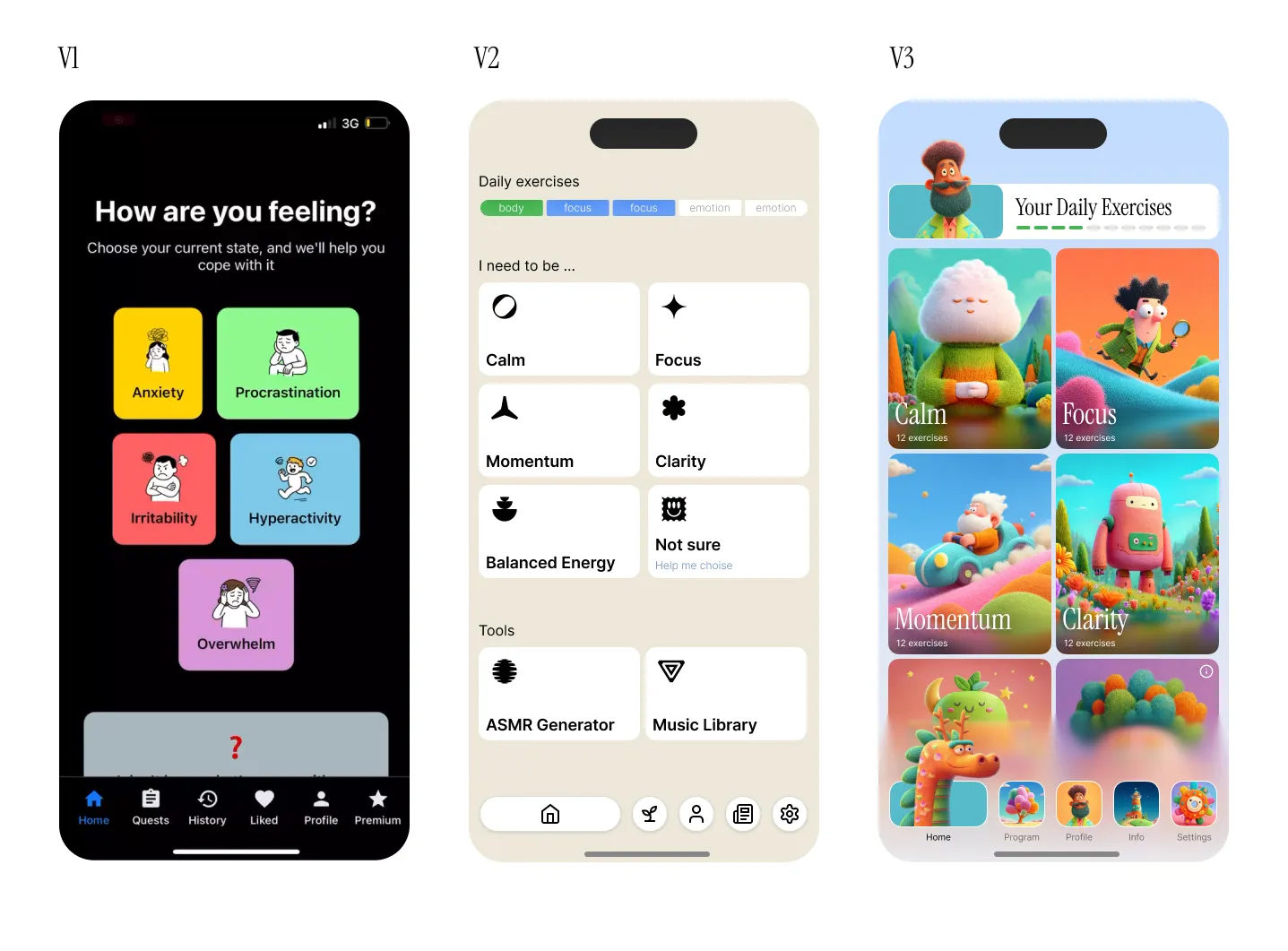
The previous version of DeeDee had a purely functional design. It worked: users with ADHD symptoms could get personalized programs to stabilize themselves throughout the day.
Our team is small — Vitya (developer), Sviatoslav (designer), and Denis (marketing). We all agreed: the design had to change drastically. We saw three possible directions:
- stick with functional minimalism,
- mix flat design with gentle illustrations à la Notion,
- or explore our own character-based visual style.
Sviatoslav showed us a few AI-generated sketches made in Midjourney — some soft, plush-like characters and a little dinosaur. That moment turned everything around. The images evoked comfort and calmness — exactly what we wanted our users to feel. Without hesitation, we started calling this approach "soft design" because it looked like something made of cozy yarns and plush textures — objects you want to touch and interact with.
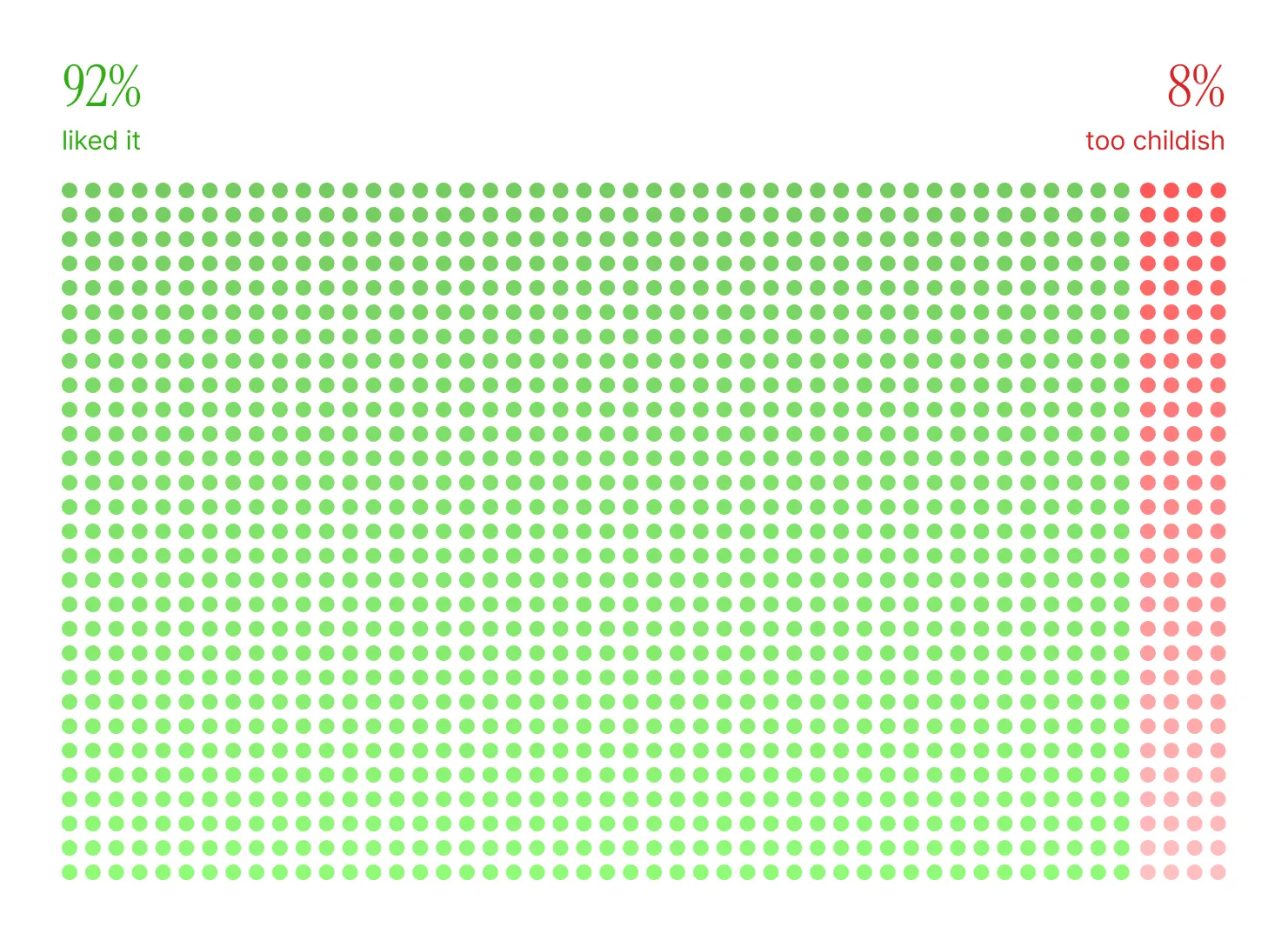
To validate this idea, we surveyed over 200 people. The results were surprising: 92% reacted positively to the "soft design." They described it as pleasant, calming, and joyful to engage with.
About 8% found it "too childish" — but even that came across as constructive. For people with ADHD, the visual appeal and tactile-like quality of illustrations are a source of comfort and focus. We embraced that feedback as confirmation.
We also analyzed competitors and noticed that our new design strongly differentiated us in the App Store, both visually and emotionally — an important factor beyond ASO and reviews.
Stage 2 — A Visual System for Growth
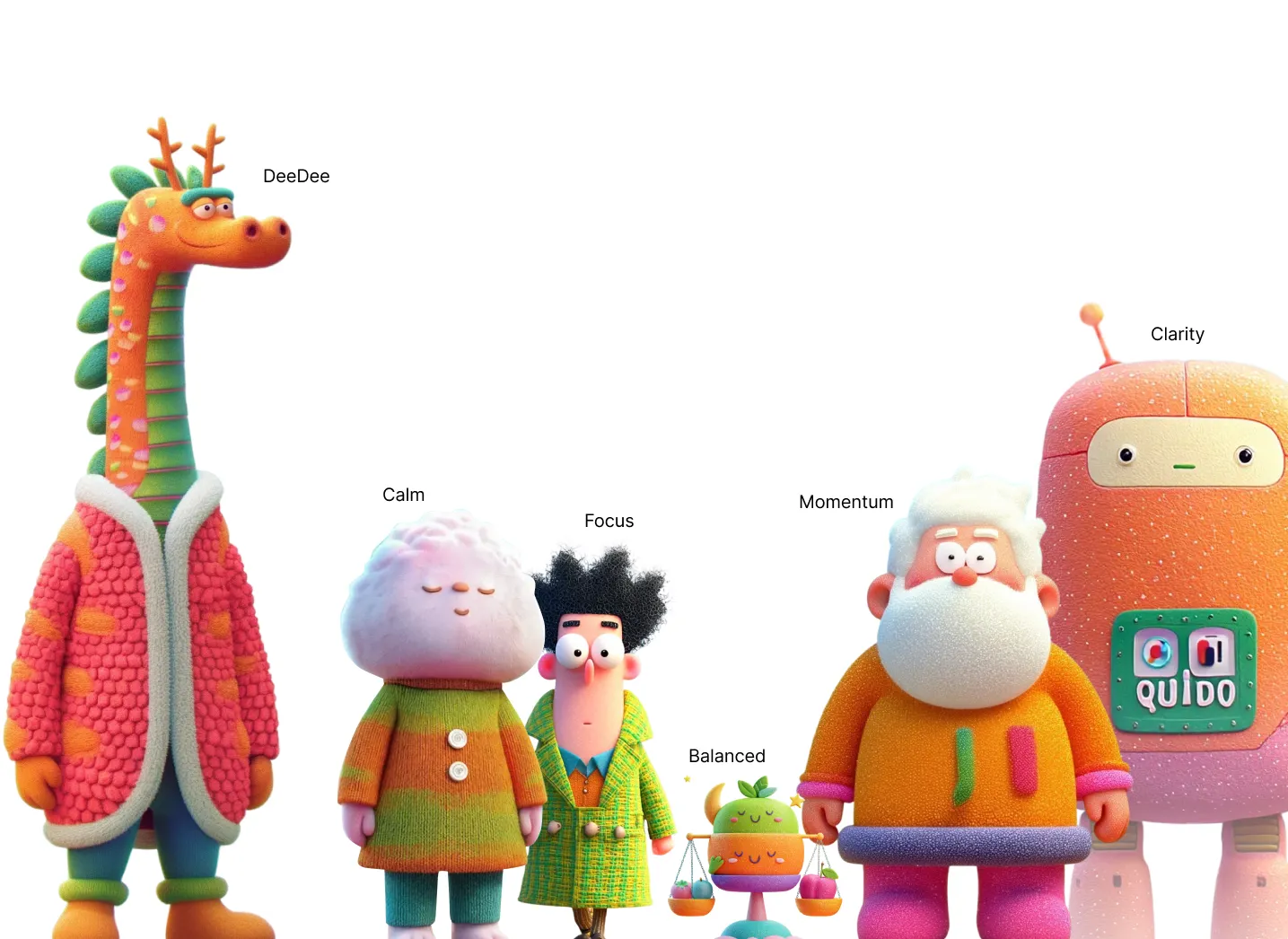
The redesign became a relaunch. We needed a scalable foundation for future growth. Initially, we had one character — a dragon named DeeDee — chosen deliberately because dragons were rare among mascots in productivity or wellness apps. DeeDee stayed as our main character, but soon we expanded this idea into a whole family of characters. Each character represented a different function or category within the app, making navigation more intuitive and immersive.
Thanks to this visual system, our app now feels more friendly and personalized. Each exercise has its own character context — something that greatly supports engagement and motivation for users with ADHD.
Generating dozens of characters manually would've been nearly impossible on our timeline. With Midjourney, we produced thousands of variations and selected visuals for 54 exercises, main screens, and marketing creatives — all within 30 days. A few years ago, this scope would have required a much larger team and months of production. AI made "soft design" achievable and scalable.
Stage 3 — Positioning
Design and communication go hand-in-hand. Alongside the visual concept, we needed to refine our messaging and brand positioning. At that time, we didn't yet have impressive metrics or App Store awards to showcase, so we decided not to talk about numbers. Instead, we focused on connection — putting the person with ADHD first.
That's how we came up with our positioning line:
"N2 after you in managing your ADHD."
This phrase captures our philosophy. You come first; DeeDee is your partner, your second-in-command, your supportive companion.
The dragon speaks directly to users inside the app: encouraging them, asking for feedback, and offering small motivating interactions. The goal is simple — make DeeDee feel like a friend who helps you through ADHD, not just a tool you use.
Stage 4 — Growth After Release
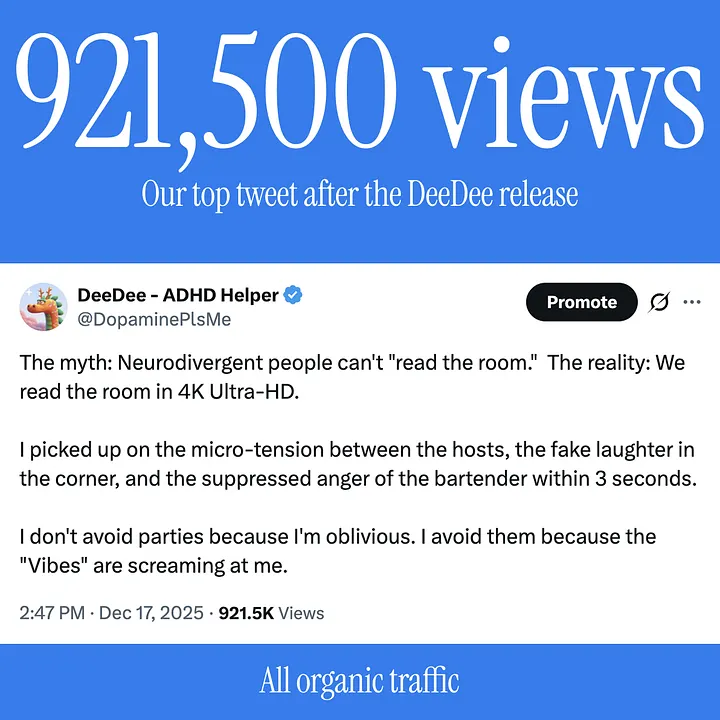
After the redesign, our metrics skyrocketed — literally thousands of percent, as we had only organic traffic before. The real sign of success came a month later: the growth sustained, with monthly active users increasing by 80–100%.
Most of our traffic now comes from Twitter (X) and Facebook, and our organic reach on X has already surpassed 5 million views.
One of the biggest surprises? The "soft design" works incredibly well in ads. It reduces click costs and improves conversions. In our pilot campaign in Los Angeles, the average price for a target action (click-through to stores) is just $0.31 — a fantastic result.
People constantly mention the design in feedback. It clearly shows that our decision wasn't just aesthetic — it was strategic.
A recent study by Maede Hosseinnia et al., "Applications for the management of Attention Deficit Hyperactivity Disorder: a systematic review," confirms that digital tools can help manage ADHD symptoms. We can't yet claim that our "soft design" directly supports treatment, but early data suggests it works almost like a fidget — calming, engaging, and grounding.
These effects directly shape user interactions and performance metrics. Our first results show that design can influence not only retention and engagement but also emotional stability.
In the future, we aim to prove that "soft design" can become a fundamental behavioral support mechanism for people with ADHD.
You can touch the "soft design" yourself in the app DeeDee.